Load Is More Than Distance
Many runners default to mileage as their primary measure of effort. If you ran 10 km, you trained harder than someone who ran 8 km. But sports science tells a more nuanced story. A 2020 study in the *Journal of Orthopaedic & Sports Physical Therapy* by Paquette et al. specifically called out this limitation, noting that weekly distance alone fails to capture the real stress placed on the body. Your actual training load, the physiological and psychological demand placed on your system, varies even when external conditions appear identical.
What Changes Day-to-Day?
Several biological and environmental factors shift your perceived and actual effort with every run:
Sleep quality and quantity: Even one night of poor sleep has measurable effects on running economy and perceived exertion. Research has consistently shown that sleep deprivation elevates RPE (Rating of Perceived Exertion) at any given pace, meaning the same run will feel harder when you're sleep-deprived.
Cumulative fatigue: The load you've accumulated over the previous days matters enormously. A study tracking a recreational runner over a 20-week macrocycle (Piatrikova et al., 2021) demonstrated that training load monotony, the ratio of average load to the standard deviation of load, was significantly correlated with physiological markers, including heart rate variability (HRV). When prior days were heavy, the body's readiness to perform was demonstrably reduced.
Hydration and nutrition status: Glycogen depletion from prior sessions or inadequate fuelling between runs directly impairs performance and amplifies perceived effort.
Environmental conditions: Heat, humidity, elevation, and terrain all increase metabolic demand. Running in 25°C heat places a substantially higher cardiovascular stress on the body than the same run at 12°C.
Illness and immune status: A drop in HRV has been observed even before clinical symptoms of illness appear. Piatrikova et al. (2021) documented an acute fall in RMSSD (a key HRV marker) the day before a runner developed influenza, illustrating that the body "knows" something is wrong before the athlete does.
Internal vs. External Load in Action
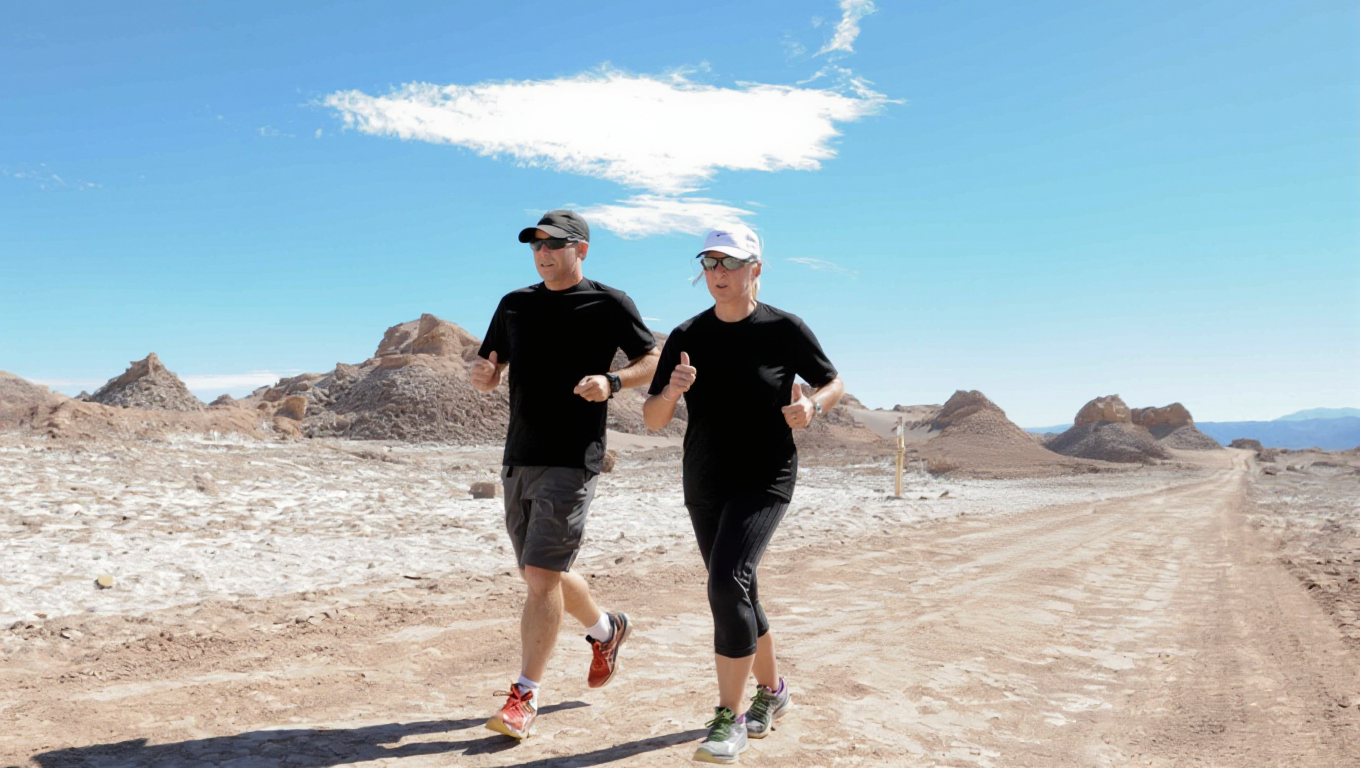
This variability reflects a core principle in sports science: external load (what you do) and internal load (how your body responds) are distinct but related. Two runners covering the same distance at the same pace may experience entirely different physiological demands depending on their readiness.
"The same run, the same conditions, but a different athlete. Your body is not a machine. It is a biological system that changes every single day."*
Practical Takeaway
Rather than judging a session against what it "should" feel like, treat your daily readiness as a variable to monitor. Using subjective markers such as HR, sRPE, HRV, and subjective wellness scores (fatigue, mood, muscle soreness) allows you to build a more accurate picture of your true daily load. The goal isn't to eliminate variation, it's to understand it and train accordingly.